Where do I sell silver in East Brunswick, NJ?
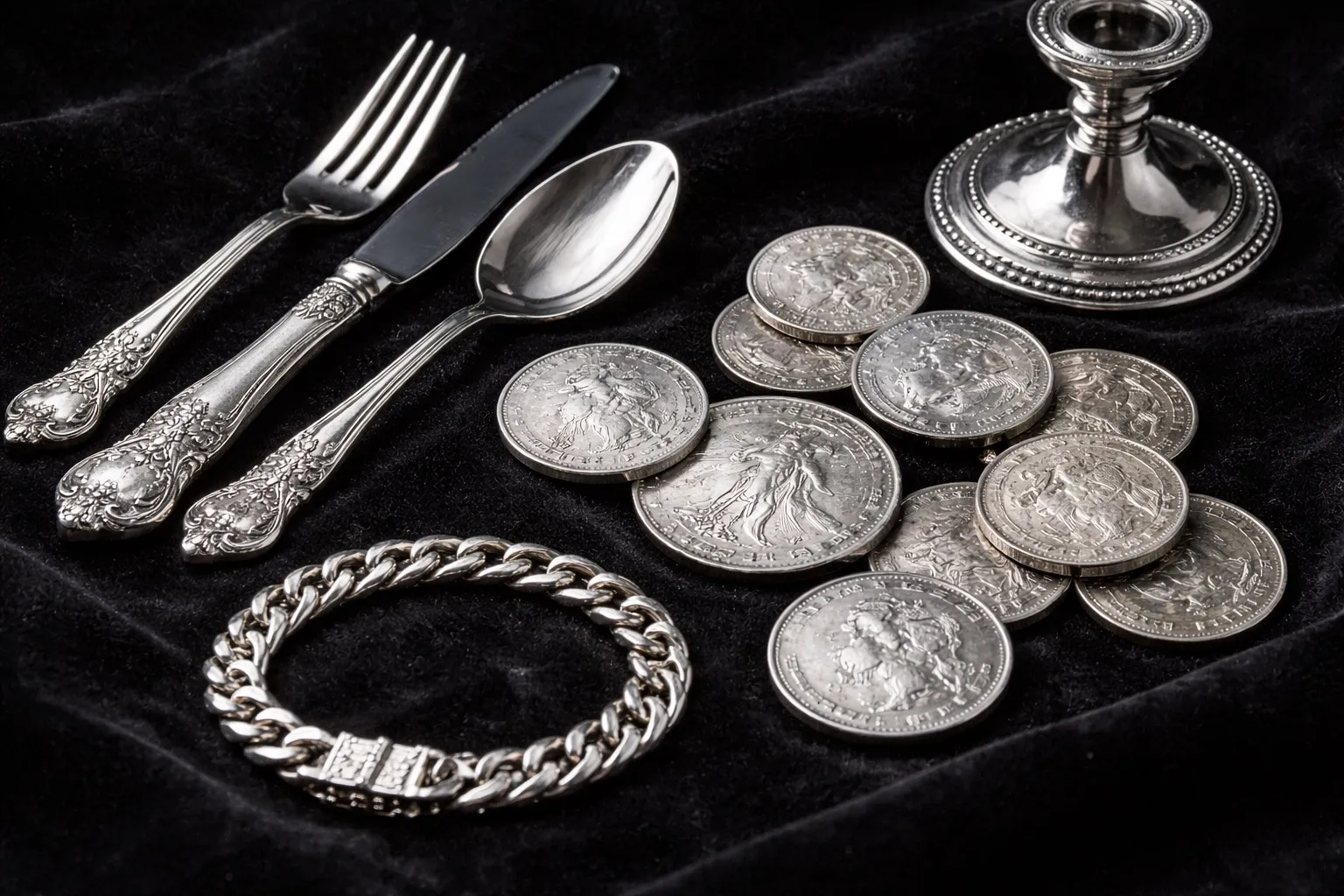
Our counter at 111 Main St Suite 9 sits a block off the Route 18 retail corridor, the road nearly everyone in this part of Middlesex County already drives for errands, and a short hop from the New Brunswick and Rutgers side of the river. We buy every form of silver here: sterling jewelry and holloware, complete and partial flatware services, .999 fine bars and rounds, government bullion coins, and circulated pre-1965 US coinage.
Hours are Monday to Friday 10am to 6pm and Saturday 10am to 3pm, closed Sunday, with no appointment needed. Testing is free, the offer is free, and walking away costs nothing. If you would rather talk it through before making the drive from Old Bridge or Spotswood, call the store first.
A large share of the silver that reaches this counter arrives from estate cleanouts: a flatware chest from a Milltown attic, a coffee can of coins from a South River basement. The single most useful thing to know before choosing a buyer is that each form of silver is priced on different math, and a buyer who flattens an estate box into one scrap number is underpaying you somewhere. That is what the rest of this page walks through.
Do bars, coins and sterling sell on the same math?
No, and the gap between the right math and the lazy math is where sellers win or lose. A .999 fine bar is the simplest case: exact stamped weight, near-total purity, so its value is verified weight against the live market and little else. Coins add a second question, because a date or mint mark can put collector demand above the metal, and government bullion coins such as American Silver Eagles trade above the raw silver figure on their guaranteed weight alone.
Sterling is the .925 standard: 92.5 percent silver alloyed with copper so it survives daily use. Jewelry and holloware are valued on weight, with one exception worth flagging: a recognised designer or maker line can carry secondary-market appeal beyond the metal, and we price those on the higher figure instead of melting them by default.
Here is the full map: each form we see in East Brunswick, what it usually turns out to be, and how the counter handles it.
| What you bring | What it usually is | How the counter treats it |
|---|---|---|
| Silver bars and rounds | .999 fine, from one ounce up; estate lots here often hold ten-ounce investment bars | Weight confirmed on the certified scale, purity confirmed by XRF, priced against the live market |
| Government bullion coins | American Silver Eagles, Canadian Maple Leafs, Mexican Libertads | Priced above the raw metal figure on guaranteed weight and worldwide recognition |
| Pre-1965 US coinage | Dimes, quarters and half dollars, 90 percent silver by mint standard | Melt value from face value and the live rate, after every date and mint mark is checked for premiums |
| Numismatic coins | Key dates, low mintages, graded and proof pieces | Valued on rarity, grade and market demand, never melted when the collector figure is higher |
| Sterling jewelry | Chains, bracelets, rings, pendants marked 925 | Weighed and priced on silver content; recognised maker pieces flagged for value beyond the metal |
| Sterling flatware and serving pieces | Full or partial services from makers like Gorham, Towle, Reed and Barton | Solid pieces weighed as metal; hollow-handle knives separated because stainless blades carry no silver |
| Holloware and weighted pieces | Candlesticks, trays, bowls; many candlesticks have weighted bases | XRF separates solid sterling from weighted or plated construction before any pricing |
| Silver-plate | Flatware and trays over base metal, common in estate boxes | Identified by the analyzer and handed back; minimal scrap value, never bought as sterling |
Not sure whether the chest holds sterling or plate? The analyzer settles it in two minutes, free, in front of you.
📞 Call the East Brunswick Store: (732) 898-6565How is my silver tested before it is priced?
Instrument first, scale second, market rate in the open. Before anything is weighed, every piece meets the XRF spectrometer, which reads the exact alloy in about two minutes with no scratch, no file and no acid. That matters for estate items especially, because a piece a family later decides to keep goes home exactly as it arrived.
The readings leave no room for argument. Sterling registers at 92.5 percent, fine bars and rounds at .999, and pre-1965 US dimes, quarters and half dollars at 90 percent by mint standard. Silver-plate over base metal shows itself in the same pass and is set aside, because plate carries minimal scrap value and no honest buyer prices it as sterling.
Confirmed silver is then grouped by type and weighed on a certified scale positioned so you can read it, and the current market rate is applied to the verified weight with every step inside your sight line.
What happens with an inherited flatware chest?
It gets the most careful handling of anything on this page, because flatware is where estate value concentrates. A sterling fork carries the same .925 purity as a sterling bracelet, but a service for twelve with its ladles, tongs and serving pieces can run several pounds of solid metal, which makes an inherited chest from a maker like Gorham, Towle, Reed and Barton or International Silver one of the highest-value lots this counter sees.
The sorting is where fairness is proven. Forks, spoons and serving pieces are weighed as solid sterling. Hollow-handle knives are separated first, because their stainless blades carry no silver and an honest figure cannot include them. Weighted candlestick bases and any plated filler pieces mixed into the chest are caught by the analyzer and set aside, so the payment covers genuine sterling and only that.
Do not sort, polish or inventory anything at home. Bring the chest exactly as it came out of the closet; separating it is our job, done in front of you.
Could a piece be worth more than its melt value?
A meaningful slice of what arrives in East Brunswick is. Most sterling is honestly valued on verified weight against the live market, and we say so plainly. But estate lots regularly hide a coin whose date puts collector demand far above the metal, a graded proof set, or a signed maker piece with secondary-market appeal. Those are flagged at the counter and priced on the higher figure rather than flattened into scrap.
That second look is the working difference between this counter and a generic scrap desk. An 1893-S Morgan dollar is worth a multiple of its silver; an American Silver Eagle trades above the raw metal figure; a heavy chased serving piece from a recognised line can warrant more than its weight. Each of those calls is made in front of you, not in a back room.
If you suspect a piece carries value beyond its metal, say so when you set it down. And if we spot it first, you hear about it either way; that policy is why estate referrals keep coming back to Main Street.
Handling an estate? Bring the whole box unsorted. We separate sterling, plate and collector pieces in front of you.
📞 Call the East Brunswick Store: (732) 898-6565Is there a better day of the week to sell?
Not in the way people hope. The silver market moves through every trading day, so the same flatware chest can attach to a different figure on Tuesday than on Friday. That is the market moving, not the counter changing its mind.
It is also why no honest buyer prints a per-ounce figure on a web page or quotes a firm number down the phone sight unseen. When you visit, the live rate is pulled at the moment of your transaction and shown to you, so you can check it against any financial app on your own phone before deciding anything.
The practical rule is simple: the day you are satisfied with the market is the day to come in, because the number quoted publicly that day is the number this counter works from.
What does the visit look like start to finish?
You walk in with the silver in whatever state it is in: no polishing, no sorting, no lists. Everything goes on the counter and stays in your sight. The analyzer confirms each group, the certified scale shows each weight, and you receive a clear line-item breakdown of weight, purity and calculated value per group, with any collector-value coins flagged and priced individually.
Accept, and you are paid in cash the same day. Decline, and every item goes straight back into your hands. There is no charge and no obligation either way, and most visits run fifteen to thirty minutes even for a full estate box.
One requirement is not ours to waive: New Jersey law requires a valid government-issued photo ID for every precious metals purchase, so bring one each visit.
East Brunswick silver buyer FAQs
Where can I sell silver in East Brunswick, NJ?
Cash 4 Gold Trading Post buys silver at 111 Main St Suite 9 in East Brunswick, a block off the Route 18 corridor. Sterling jewelry, flatware, holloware, bars, rounds, bullion coins and pre-1965 US coinage are all bought at this counter. Call (732) 898-6565 if you want to talk anything through before driving over.
Do I need an appointment to sell silver in East Brunswick?
No. The counter serves walk-ins whenever the door is open: Monday to Friday 10am to 6pm and Saturday 10am to 3pm, closed Sunday. Most visits take fifteen to thirty minutes, and New Jersey law requires a valid government-issued photo ID for every purchase.
Can you handle a whole estate lot in one visit?
Yes, and unsorted is the right way to bring it. Estate boxes routinely mix sterling, plate, coins and costume pieces, and separating them is our job. Each piece is read by the XRF analyzer, grouped by type, weighed on a certified scale and priced line by line, so a family settling an estate leaves with one clear itemized figure.
How do I know if inherited flatware is sterling or plate?
Look for a Sterling or 925 stamp, but do not rely on your eye: plate and sterling can look identical. Sterling is solid silver at 92.5 percent purity and carries real weight value; plate is a thin silver layer over base metal with minimal scrap value. Every piece is confirmed by XRF before pricing, and plate is handed back rather than bought as sterling.
Why are hollow-handle knives counted differently?
Because only the handle is sterling. The blade is stainless steel, which carries no silver value, so an honest buyer separates knives from the rest of the service and credits the sterling portion only. A buyer who weighs whole knives as silver is inflating the weight to disguise a weaker rate.
Are coins from an old coffee can worth more than face value?
Almost always. Pre-1965 US dimes, quarters and half dollars are 90 percent silver by mint standard, so their melt value sits far above face value. Every date and mint mark is checked before melting is even considered, because a key date like an 1893-S Morgan dollar is worth a multiple of its silver, and you are offered the higher of the two figures.
Can you tell me a price over the phone?
Not a firm one, and be wary of any buyer who will. The figure depends on tested purity, verified weight and the live silver market at the moment of sale. What a call can settle is what is worth bringing in and roughly how long the visit will take.
Are you a pawn shop?
No. Selling silver here is a completed purchase: you are paid in cash the same day and the transaction ends there. We buy rather than lend, nothing is held as security against a debt, and there is no ticket, no interest and no redemption involved.
Which towns is the East Brunswick store closest to?
Main Street and the Route 18 corridor put this counter within an easy drive of Cranbury, Helmetta, Jamesburg, Milltown, Monroe Township, North Brunswick, Old Bridge, Parlin, Sayreville, South River and Spotswood. Sellers on the New Brunswick and Rutgers side of the river are minutes away as well.